Education
Whitepaper | From Awareness to Readiness: Managing Digital Signatures in the Age of UTS
By: Michael Stokes, SVP of Strategic Growth & Marketing
Executive Summary
The global commercial data ecosystem, including mobile telemetry, social media, data brokers, and AI-enabled analytics, has significantly reduced the Joint Force’s ability to conceal operational intent and indicators. Adversaries can now derive insights from observable patterns in force movement, logistics activity, device emissions, and online behavior using commercially available data and analytic tools. The Department of War (DoW) has increasingly recognized the operational risk created by publicly accessible and commercially available data. The next challenge is institutional: how to move from awareness, policy guidance, and localized mitigation efforts to a measurable, force-wide approach that treats digital exposure as a readiness, force protection, and mission assurance concern. Traditional OPSEC, cybersecurity hygiene, social media guidance, and device policies remain necessary, but they are not alone sufficient against adversaries that can aggregate commercial data, detect anomalies, and infer operational intent at scale.
To maintain operational advantage, the DoW has an opportunity to move beyond compliance-based risk mitigation and toward force-wide Signature Dominance. This transition requires three institutional actions: first, designating a senior accountable lead or governance mechanism aligned with the Department’s intelligence, counterintelligence, security, mission assurance, force protection, and OPSEC equities; second, creating an enduring requirements and resourcing pathway, whether through a Joint Program of Record (PoR), service-led program, enterprise capability, or other durable acquisition mechanism; and third, operationalizing Digital Signature Warfare (DSW) as a practical discipline for understanding, managing, and shaping the signatures the Joint Force inevitably produces.
Visibility is increasingly the default condition. The operational question is whether the Joint Force can understand, govern, and shape its digital signatures before adversaries can exploit them. Signature Dominance provides a practical framework for moving from awareness to measurable institutional readiness.
The Post-Obscurity Reality: Visibility as the Default Condition
In Operating Beyond Obscurity: Winning in the Age of UTS, Veilant established a new baseline for the Joint Force: visibility is the default. The “Digital Mirror,” which is the high-fidelity reflection of our movements, associations, and intent captured by the global commercial data ecosystem, is no longer a theoretical concern. It is an operational fact.
Ubiquitous Technical Surveillance (UTS) has significantly reduced the viability of relying on concealment alone to protect force activity. Traditional notions of “going dark” are obsolete. In the contested environments of INDOPACOM and the gray-zone, the adversary does not need a satellite overhead to find a carrier strike group or a Special Mission Unit (SMU). In many cases, commercially available data and fused analytics may be sufficient to reveal indicators that previously required dedicated intelligence collection. The gray-zone in this context is the contested space between routine statecraft and conventional warfare, in which adversaries use ambiguous, deniable, and often non-kinetic methods to alter the strategic balance in their favor, while staying below the threshold that is likely to trigger a conventional military response. In practice, gray-zone competition is persistent, cumulative, and designed to exploit ambiguity, attribution challenges, and institutional hesitation.
The implication extends beyond the tactical fight. UTS is shifting the locus of strategic competition from the moment of combat, where U.S. military superiority remains decisive, to the period before it, where adversaries who can observe our patterns of mobilization, logistics, procurement, and personnel movement can anticipate our plans, avoid our strengths, and maneuver below the threshold where our most advanced capabilities would ever be brought to bear.
The DoW has crossed the threshold of awareness. Commanders at every echelon now understand that they are being watched. The strategic gap in 2026 is no longer whether leaders understand the threat, it is whether the institution can implement countermeasures at the speed and scale the threat demands. The problem is now sufficiently understood. The next step is to redesign governance, readiness, and resourcing to address it at scale. That requires a fundamental shift in posture, from the reactive, defensive stance of risk mitigation to the deliberate, force-wide pursuit of Signature Dominance: the ability to detect, manage, and ultimately weaponize our own digital signatures before the adversary can exploit them.
From Compliance to Competitive Advantage: Evolving Beyond Legacy OPSEC
Today, the DoW manages operational signatures as part of force deployment and employment, but there is still potential for a more comprehensive approach. Parts of the UTS problem are currently addressed through OPSEC checklists, cybersecurity hygiene, social media restrictions, device policies, and ad hoc remediation efforts. These measures remain necessary, but they do not add up to force-wide signature management. They are point defenses against a machine-speed adversary that can reconstruct operational intent from the aggregate of our data exhaust across commercial networks, mobile devices, logistics activity, and online behavior.
Data exposure must be addressed as a force protection and sustainment issue, not solely as a compliance matter. When adversaries can observe operational patterns through commercial data sources faster and more cheaply than the DoW can identify and mitigate those indicators, they gain decision advantages and erode the operational surprise on which many plans depend. Therefore, data must be treated as part of the logistical supply chain that sustains information advantage – controlled, curated, and protected with the same rigor we apply to fuel, ammunition, and weapons.
Compliance-based security is binary. It asks if a device was encrypted or if a social media policy was signed. It does not ask if a unit’s operational signature can be reconstructed by a hostile AI. It does not measure how likely an adversarial AI engine can forensically reconstruct observable indicators across logistics, device telemetry, travel, and online activity to identify force activity, infer intent, or cue further collection. These systems can link a fuel purchase in Guam to a surge in cell phone telemetry at a specific pier.
If UTS is treated as a compliance issue rather than an operational requirement, the DoW will continue to approach the threat through fragmented defenses. Responsibility is currently dispersed across CIOs, G-2s, and counterintelligence offices. The DoW must consolidate signature management under a single accountable authority, aligning governance to the speed and scale of the modern threat.
The significant institutional transformation currently underway across the DoW, including efforts to disrupt the status quo and break down silos, presents a unique opportunity to challenge legacy assumptions, make progress in the realm of UTS, and act with urgency in support of the warfighter. Signature Dominance can be embedded into the force design conversation, not as an additional burden, but as a natural extension of the DoW’s commitment to making the Joint Force faster, more lethal, and harder to target.
The Boutique Illusion: The Whole-of-Force Vulnerability
There is a persistent misconception that digital-signature risk is limited to small, sensitive, or specialized units such as the Joint Special Operations Command (JSOC) and other Special Mission Units (SMU). In practice, adversary analytics do not respect organizational boundaries. Even well-protected mission elements can be exposed by surrounding administrative, logistical, travel, family-support, vendor, and other platform signatures.
A SMU is only as dark as its logistics tail. In Operating Beyond Obscurity, Veilant introduced a three-ring framework for understanding exposure in the age of UTS: the Outer Ring focuses on avoiding investigative triggers before the act, the Inner Ring focuses on protecting the operational act itself, and the Middle Ring focuses on mitigating forensic reconstruction afterward. The framework matters here because protecting the act itself is not enough if indicators in the Outer Ring attract adversary attention before execution, or if data in the Middle Ring enables attribution after the fact. Adversary analytics do not focus solely on the operator. They also exploit the administrative, logistical, and family-support indicators that surround the mission, including the clerk processing travel orders, the supply technician procuring specialized gear, and the family members posting in deployment-support groups. Even if the operator remains well protected, those surrounding indicators can still expose the mission.
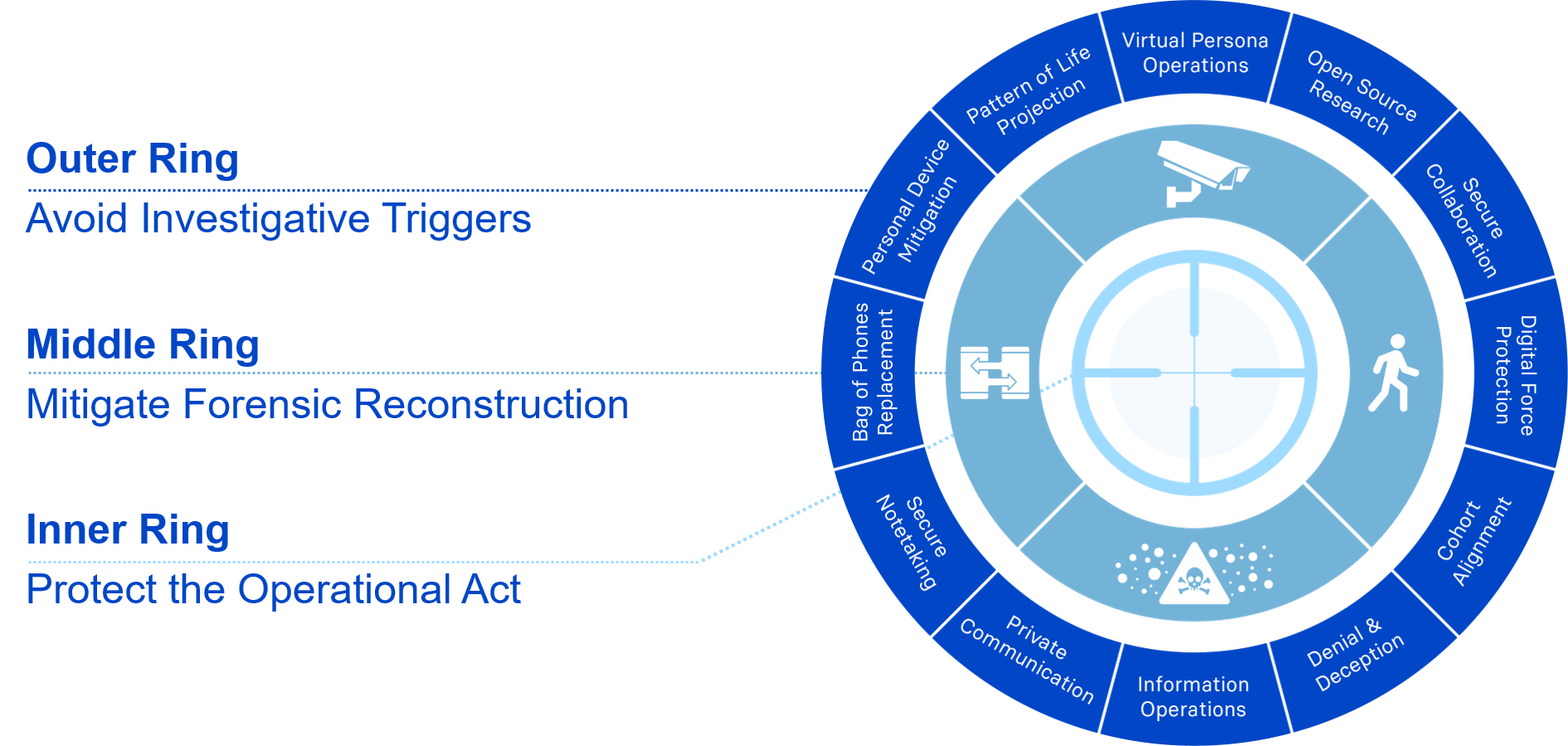
Figure 1: Protecting operations requires confronting UTS threats before, during, and after the operational act by offensively and defensively managing digital signatures.
Several examples illustrate this pattern:
- The so-called ‘Pizza Indicator’: For decades, spikes in late-night pizza deliveries to or near the Pentagon and other national-security institutions have been treated as a rough indicator of crisis activity and elevated operational tempo. The lesson is not about pizza. It is that support activity around a command hub can become an observable indicator of impending operations. The modern version is broader and more consequential, because food deliveries, rideshare activity, hotel reservations, logistics contracts, payment behavior, mobile telemetry, and social media can all be correlated at scale.
- The Logistics Beacon: The March 2026 Strava incident on a French aircraft carrier, as well as the 2018 findings on U.S. soldiers using Strava, demonstrated that a single fitness tracker could map the layout and activity patterns of classified facilities. A single supply clerk at a Port of Embarkation (POE) using a fitness tracker can likewise inadvertently map the exact staging area of sensitive deployments.
- Administrative and Logistical Indicators: Even highly controlled operations can be exposed by the support activity that precedes them. Joint OPSEC doctrine identifies billeting, transportation arrangements, supply delivery, personnel arrival, and related administrative activity as indicators that can reveal friendly operations when observed and correlated by an adversary. In practice, if those supporting indicators are not managed to align with the surrounding environment, they can attract attention and cue further collection before the first operator reaches the objective.
The tip of the spear cannot be secured if the rest of the spear is glowing in the dark. Sensitive mission elements cannot be protected in isolation. In a fused data environment, the support ecosystem around the mission becomes part of the mission signature. Signature Dominance must therefore be treated as a whole-of-force requirement.
The Mandate for Governance: The SRO and the PoR
To institutionalize Digital Dominance, signature management must move from fragmented policy and localized practice into force design, readiness governance, and durable resourcing.
- The Senior Responsible Official (SRO): A single, empowered authority is needed within the Department to be responsible for integrating policy, training, and acquisition. The accountable lead should have a defined role in readiness governance, including the ability to require digital-signature risk assessments, direct remediation, and elevate unresolved exposure risks before deployment decisions are finalized.
- A Joint Program of Record (PoR): Signature management cannot depend indefinitely on innovation funds, pilots, or isolated operational workarounds. It requires a durable resourcing pathway, whether through a Joint Program of Record, service-led program, enterprise capability, or other acquisition mechanism, to acquire signature-resilient mobility systems, fund persistent Digital Mirror monitoring, and scale DSW training across relevant operational and support communities.
The governance structures proposed above are necessary, which will remain theoretical unless three subjects are addressed. First, who owns this problem today? Without a named owner with authority, budget, and accountability, digital signature management will continue to be everyone’s concern and no one’s responsibility. Efforts will remain fragmented across isolated staff cells, underfunded pilot programs, and well-intentioned but uncoordinated initiatives that never achieve the mass or permanence required to match an adversary operating at machine speed.
Second, is digital force protection a discrete mission requirement or merely an annex to legacy OPSEC constructs? This is not a semantic distinction; it is the single decision that determines whether counter-UTS drives its own doctrine, resourcing, and acquisition line, or whether it remains subordinated to a compliance framework designed for a pre-UTS operational environment. As long as digital signature management is folded into existing OPSEC programs, it will compete for attention against legacy priorities, lack a dedicated requirements pathway, and never generate the acquisition documentation necessary to field capabilities at scale. Treating it as a standalone operational requirement, on par with force protection, cyber defense, or electronic warfare, is the only path that leads to programmatic resourcing and doctrinal integration.
Third, relevant tools, practices, and operational lessons already exist across government, industry, and in specialized mission units. The remaining challenge is transition: identifying what works, validating it against realistic threat models, and scaling it through governance, training, acquisition, and assessment. The proposed governance and resourcing pathway would help connect proven approaches to the operators and support personnel who need them.
Shaping the Signal: Digital Signature Warfare (DSW)
The ultimate goal of Signature Dominance is not to vanish. It is to shape the adversary’s perception and reduce exposure. If visibility is the default, then the signature itself is a weapon.
The objective is not merely to reduce exposure. It is to increase adversary uncertainty. In a UTS environment, adversaries may detect data, but detection does not automatically produce understanding. The Joint Force should therefore measure and manage three outcomes: reducing avoidable anomalies, preserving plausible cohort fit, and increasing reconstruction error when adversaries attempt to correlate people, devices, movements, transactions, and logistics activity after the fact:
- Baseline Normalization: Establish routine, lawful, and mission-appropriate digital patterns before operational need arises, so necessary activity does not appear as a sudden anomaly.
- Digital Feints: Projecting the digital signature of a high-value asset or a logistics surge in one location while the physical maneuver happens in another.
- Increasing Reconstruction Error: By deliberately injecting jitter into our telemetry, such as staggering payment cadences, time-shifting device movements, and rotating digital identities, we force the adversary’s AI to work harder for lower-confidence results. We don’t hide the data; we make the data lie.
Conclusion: Ownership or Exposure
Obscurity is dead, but initiative is not. The commercial data ecosystem is a contested battlespace, and we are currently ceding the high ground.
The DoW has an opportunity to recognize digital force protection as a fundamental requirement for the entire Joint Force.
The next phase of counter-UTS should be practical and measurable. The Department should clarify ownership, assess current policy and training gaps, establish repeatable digital-signature assessments, validate mitigation approaches through operational red-teaming, and create durable resourcing paths for capabilities that prove effective. The goal is not to add another compliance burden. The goal is to give commanders a reliable way to understand and manage the signatures their forces already generate. This requires accountable governance, durable resourcing, and a whole-of-force approach that includes operators, commanders, administrators, logisticians, families, vendors, and support personnel whose activity can become part of the mission signature so to empower every warfighter, from the operator to the admin clerk, to turn their digital signature from a vulnerability into an instrument of war.
The question is no longer whether we are being watched. The question is what we intend to make them see.
About Veilant
Veilant supports organizations confronting the operational realities of UTS through assessment, training, digital-signature analysis, operational planning support, and fieldable technical solutions. Our work is focused on helping leaders move from awareness to measurable action, while preserving mission effectiveness in environments where commercial data, connected devices, and AI-enabled analytics increasingly shape operational risk.
If your organization is ready to move beyond compliance and toward Signature Dominance, contact our team to learn how we can help your organization take ownership of its digital signature before the adversary does.
Disclaimer: All statements of fact, opinion, or analysis expressed are those of the author and do not reflect the official positions or view of the US Government. Nothing in the contents should be construed as asserting or implying US Government authentication of information or endorsement of the author’s views.
Additional References & Resources
- Justin Sherman, “Data Brokers and Sensitive Data on U.S. Individuals,” Duke University Sanford School of Public Policy, August 2021.
- Alex Hern, “Fitness Tracking App Strava Gives Away Location of Secret US Army Bases,” The Guardian, January 28, 2018.
- U.S. Department of Defense, Memorandum: “Use of Geolocation-Capable Devices, Applications, and Services,” August 6, 2018.
- Ryan Fedasiuk, Jennifer Melot, and Ben Murphy, “Harnessed Lightning: How the Chinese Military Is Adopting Artificial Intelligence,” Center for Security and Emerging Technology (CSET), Georgetown University, October 2021.
- James Andrew Lewis, “China’s Military-Civil Fusion Strategy,” Center for Strategic and International Studies (CSIS), various publications 2019–2024.
- Christian Brose, The Kill Chain: Defending America in the Future of High-Tech Warfare
- Paul Scharre, Four Battlegrounds: Power in the Age of Artificial Intelligence (New York: W.W. Norton, 2023).
- Center for Strategic and International Studies (CSIS), Gray Zone Project, and Jake Harrington and Riley McCabe, “Detect and Understand: Modernizing Intelligence for the Gray Zone,” CSIS, December 7, 2021; Michael S. Groen, Andrew Borene, and Doug Livermore, “Quantifying the Gray Zone: A Framework for Measuring Hybrid Warfare Power Balances,” Irregular Warfare Initiative, July 9, 2025.