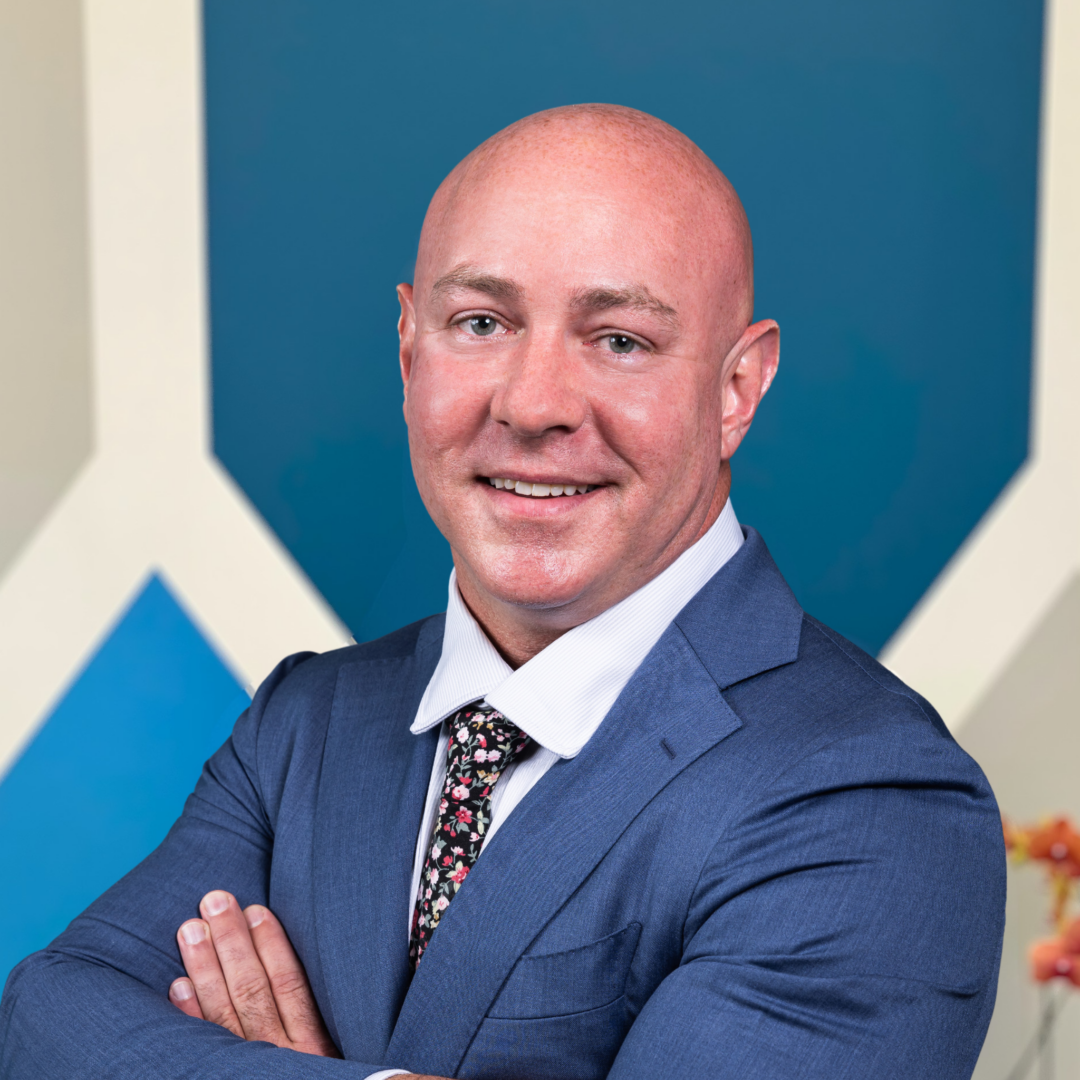
How long have you been working at Veilant?
Since day one – technically before day one. I started Veilant (formerly Ridgeline International) in 2015, but the genesis was many months prior – getting everything set up and starting the actual company and figuring out how to get a bank account and all the other things.
How would you describe your role?
There’s a writer, Antoine de Saint-Exupéry, who wrote this children’s book, The Little Prince. One of my favorite quotes from the author is, “If you wish to build a boat, you do not gather the men and send them to the woods to chop down the trees. Rather, you teach them to yearn for the vast and endless sea.” That’s always been my thought about what true inspiration and leadership is, rather than painstakingly managing people to produce this vision that is only in your head. Rather, inspire them to do what is in the realm of possible, what is in the realm of this vision, and collaboratively share in that, and you’ll end up with something better than what you thought. So, I think a lot of what I have perceived my role to be over time is to add that inspiration, that vision, that acceptance of failure, and that removal of fear or barrier around what may be a risk, to enable us to look at innovation and change the way the national security industry treats things that we’re passionate about. I think that’s really been my major role, and obviously in more minor tones, focusing on technology, the technical acumen within the staff, and our strategy and thesis around how we wish to inject technology into the theater to make this possibility.
How would you describe your leadership style?
I would say that I am very hands off. I like to give people the latitude to discover, create, and innovate, and then check in and address things whenever they’re going awry or to assist with issues. I think that we’ve hired some really phenomenal people, and introducing too many layers of management and bureaucracy only slows them down. So, what I really wish is to empower people to work at the speed that they see the world, and I think that’s the best approach.
What’s something new that you’ve learned recently?
So many things. I think learning is one of those things you thirst to do all of the time. It’s almost like a muscle – learning is a muscle, right? Here’s a story I’ve told in the past. My wife and I have been married for 25 years, and we chose early on to not have children while I was deployed and doing a lot of the very heavy tactical things that I was doing. And then I started Veilant, and then we decided to have kids. As I’ve watched them grow, I’ve realized that my role within Veilant is like with my kids. I’m going to make sure my son goes to the right school and he asks the right questions and he has good right and left limits, good moral boundaries, and he’s getting the right sleep. But really, at the end of the day, all the technical things that I’m excited to teach my son, it won’t be me that actually teaches him. He’ll discover them on his own. I think that’s much the same way at Veilant. We have to create an environment of curiosity in which learning happens incidentally in ways that you may not even perceive.
That said, what I would dive deeply into right now is the tenuousness of our superpower status on the world stage and how we ensure we have the information advantage. How tenuous is our grasp on the economic factors that put us in a global economic superpower position? What about our military capability? What about our intelligence capacity? What about our diplomacy? What does that look like on a world stage and what do we need? What are the resources necessary to maintain that? While there are a lot of really great technologies being developed all the time, I think it’s that very complex interrelationship amongst a variety of factors to which we should be paying attention to ensure we have the information advantage, the decision advantage, and the resource advantage to maintain a level of influence on the world stage that we have appreciated for literally decades. So, I think that’s the thing that I have been learning about and been most committed to over the last four years, which has been great.
What is something happening at Veilant that you’re exited to see grow or develop?
I think there are three things that I am most excited about and in no particular order. The first is the re-envisioning of our product Vision and how we are thoughtfully adding AI to reduce cognitive load and speed. I am very excited about what specifically Jon Aluise and Tim Powers and Brandon Beiler are doing on those fronts, and I’m very excited to see what that turns into in the next year.
Two is our positioning within the mobile telephony space, both physical devices and the management services behind cellular architecture and mobile device management. I’m very excited about that. We’ve realized there are many more opportunities in looking at mobile operators, mobile carriers, ODMs, the people who make the cell phones as collaborators rather than adversaries. And so, I’m very excited about what Chuck Dominick and Dave Marsee are doing, specifically on the front of the mobile telephony fields and in partnership with Sean McMillin driving a lot of the things, like our multi-factor authentication and the different types of lines that we’re able to support SIM cards, and so on and so forth. I think that’s just a really great evolution for our company. It opens up a lot of opportunity.
The third – and this is more of a broader play – is the positioning that we’ve been doing along the business development fronts with regards to senior policy makers and a little bit of the commercialization around what it is we could do as Veilant. We’ve traditionally been this government technology firm, and talking about the commerce, consumers and commercialization of it has been very difficult. But lately, I feel that we’ve really gotten our feet under us with some wonderful marketing and business development tutelage to start having those conversations and start developing those clients. Even though they are technically government officials, the products that we’re offering them are squarely commercial. And so, I think that’s a wonderful position for Veilant to be in for its growth in the next phase of what we may see. I’m very excited to see what’s on that front.
How do you think we uniquely demonstrate value to our customers?
I’m going to answer in two separate ways because I think it’s important to understand the realities. It’s really hard to demonstrate what it is we do to customers because what we do is a little bit invisible and way different. It’s a little bit more innovative, and we’re kind of talking about a problem that they haven’t had to experience in a visceral way yet. A lot of their loss of privacy, a lot of their loss of autonomy, or the slow robbing of their decision-making capacity at speed has been happening over years. While in general we’ve still been able to affect our ends, we’ve watched large-scale compromises occur. And so, it’s easy to write those off and say, well that was bad, but that wasn’t something that I did. As we start to back out in the world and look at how interconnected everything is with a lot of the data forensics and the data capacity to reassemble, reassess, or provide fairly deep insight into a scenario or an entity, our customers are probably much more affected by this than they realize. The value that we bring unfortunately is one that they may not even realize they need yet. And so, I would say that our first value is providing that education, providing that insight, providing that background, providing that executive level understanding of what the problem actually is and why it matters.
The second answer to this question is, for the customers that are sophisticated enough to know that this is the problem, we have been their go-to in this realm for the last 10, almost 11 years now, and I think the reason that we’ve been there and the value that we’ve demonstrated there is that we are relentless in our innovation and ability to solve at the speed of their mission. Our reputation and past performance are really underscored, and we’ve solidified that with them. We’ve had many opportunities of coming through a window where a client has asked us to do a thing that we don’t squarely do right that moment, and we’re the only ones that they trust to do it. I really find that as a great badge of honor, and I’m really proud of that reputational standard.
So, those would be my two answers to that question: educating the clients who don’t really understand what value we provide, to then understand our value, and then I think it’s really our reputation and our relentlessness.
How would you describe Veilant’s culture?
It would probably be very easy to describe our culture in our early days. We very much acted like a tech start-up, early government contractor. Today, talking about our culture is almost like talking about the culture inside the United States. What I really love is there is a unifying thesis. Just like in the United States, there’s this understanding of patriotism or these American ideals that we have, but the way they manifest is so different across edges of our company. When you go talk to the CIO team, you have such a tight-knit group of extremely technically-oriented and technically-minded engineers who see the world through their eyes and solve through their eyes. While they share the same spaces, the same concepts, and even some of the same themes amongst, say, our consultative services and some of our trainers who speak the same languages in many ways, I think they both see the world in uniquely different ways that allow us to, as a patchwork of resources, solve problems in a very diverse manner.
So, I think that our culture is healthily diverse, and we’ve selected for that. We think we can use technology and training to rapidly advance and maintain that decision-making advantage for our clients. That’s just the unifying thesis, and then everything else tends to be this micro-culture inside of Veilant, and I really do appreciate that. The Business Development team and Marketing see the world differently than when you go talk to the CIO team or Logistics, but everyone’s enthusiastic to do their job and Logistics doesn’t really care what font you use on a thing or what Ridgeline’s colors are. What has mattered is this other thing that brings this together. That’s what I love about it.
What is your superpower?
Probably operating on little sleep. That’s probably my superpower. I cram about three versions of a full life into a day. With the children, there’s one version of me, and then with work, there’s a version. And then, I have a lot of extracurricular commitments from being very active – I maintain an active gym routine, and I have quite a few very demanding hobbies that I do with other people, like competitive shooting. So, I think what I’d rather sacrifice is sleep. I don’t think anybody ever laid on their deathbed and was like, you know what I wish I’d done? I wish I’d gotten more sleep. So, it seems like a good bargain.