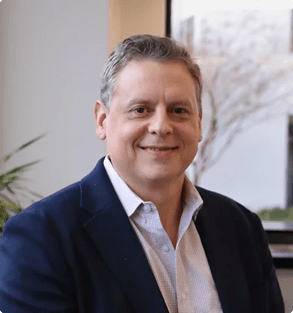
How would you describe your role?
My role is coordinating staffing and training our Training & Advisory Services (TAS) instructors to meet customer requirements. It can be chaotic, but in a fun way. No two days are the same. Our customers are very unique and their requirements are unique, so sometimes my role is to take some of the uncertainty that comes from that out of equation for our instructors and ensure that we’re meeting needs in a customer-centric way.
How would you describe your leadership style?
I just retired after 24 years in the Army, and I think the military emphasizes selflessness and being mission focused. I value hard work, dedication, loyalty, and teamwork, so those are the things I try to bring to my leadership and to cultivate over in TAS.
What’s something new you’ve learned recently?
My wife and I, over the past year, have bought land and are getting into the regenerative agriculture movement. It’s incredibly fascinating to learn how animals interact with the environment to make the land healthier and in turn those animals become healthier as a result.
What’s your superpower?
I’ve been told I’m very generous and I try to work on that. In my work life and personal life, I try to be generous with my time, with my resources.
What’s something happening at Veilant that you’re excited to see grow or develop?
Great question, and I think my answer is also something that drew me to Veilant to begin with. I used to be the head of a schoolhouse at a special mission unit. I was in charge of recruiting and training people that we were bringing into the organization for some very important tasks. What I saw in Veilant was the capability to show, in the environment, where specifically Ubiquitous Technical Surveillance was impacting our operations, to show our students what they looked like in the data. Since I’ve come over to Veilant, it’s something I’ve seen continue to grow and it’s just incredibly exciting to be a part of this and to meet a demand that is so critical.
How would you describe Veilant’s culture?
I’ve seen, especially over in TAS, that we have a very diverse culture, a diverse group of people. But, they’re also like-minded in that they’re very driven to learn and to innovate and to try new things even if it means failing. It’s like the Thomas Edison quote about finding 10,000 ways that didn’t work – even in failure, we learn. At Veilant, we recognize that it’s an important part of the innovation process.
Can you tell us about a time when you were inspired or impressed by the great work of another Veilanter?
One story that stands out is a situation with one of the TAS team leads. We’ve been working on integrating more of the technology from our Iris product line into the classroom experience and in a very short amount of time, he came up with this very actionable plan for making this happen. From procuring the devices and working with the CIO side of the company, to make those devices work on our infrastructure, to testing, and finding a new way to capture data that is connected to the routers in our classrooms. He put all of this together into a plan that we could execute and that was focused on the customer-facing experience and practical exercises. It was very powerful and he brought it all together in a matter of months.
What’s unique about Veilant?
I don’t think I’ve ever seen another company, especially one of this size, that is so devoted to technical innovation and improving and developing our people and our technical solutions.